AI search audit of a real site: every website check passed, 0 of 21 buyer answers named it
A site passed 16 of 16 website checks, yet none of 21 AI answers to 7 general buyer questions named it. Here's the step-by-step audit and fix list.
The short answer
An AI search audit checks whether AI answers and Google name your business when buyers ask about what you sell, and what to change if they don't. A GEO audit (generative engine optimisation: getting named in answers AI writes) or "AI SEO audit" is the same job.
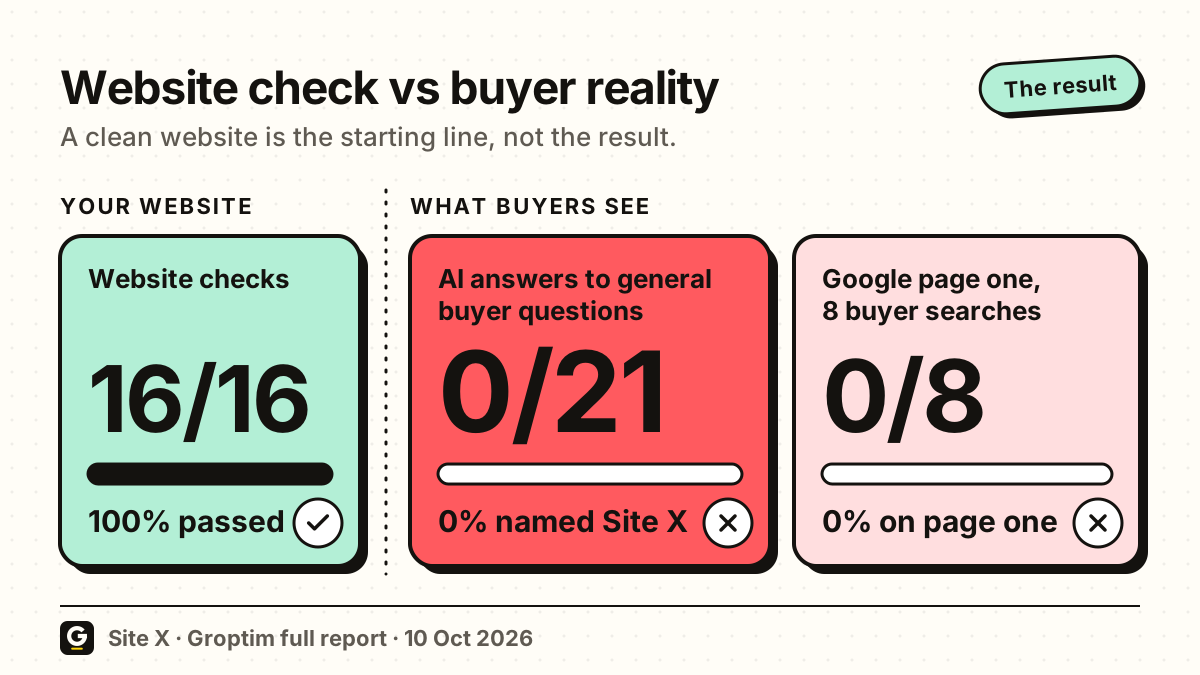
On 10 October 2026 we ran a full one on a young software website. Call it Site X. Every website check passed. Yet AI named Site X in 0 of 21 answers to general buyer questions, and Google showed it on page one for 0 of 8 buyer searches.
A clean website is the starting line, not the result.
What did the audit find?
| What was checked | Result |
|---|---|
| Website settings | 16 of 16 passed |
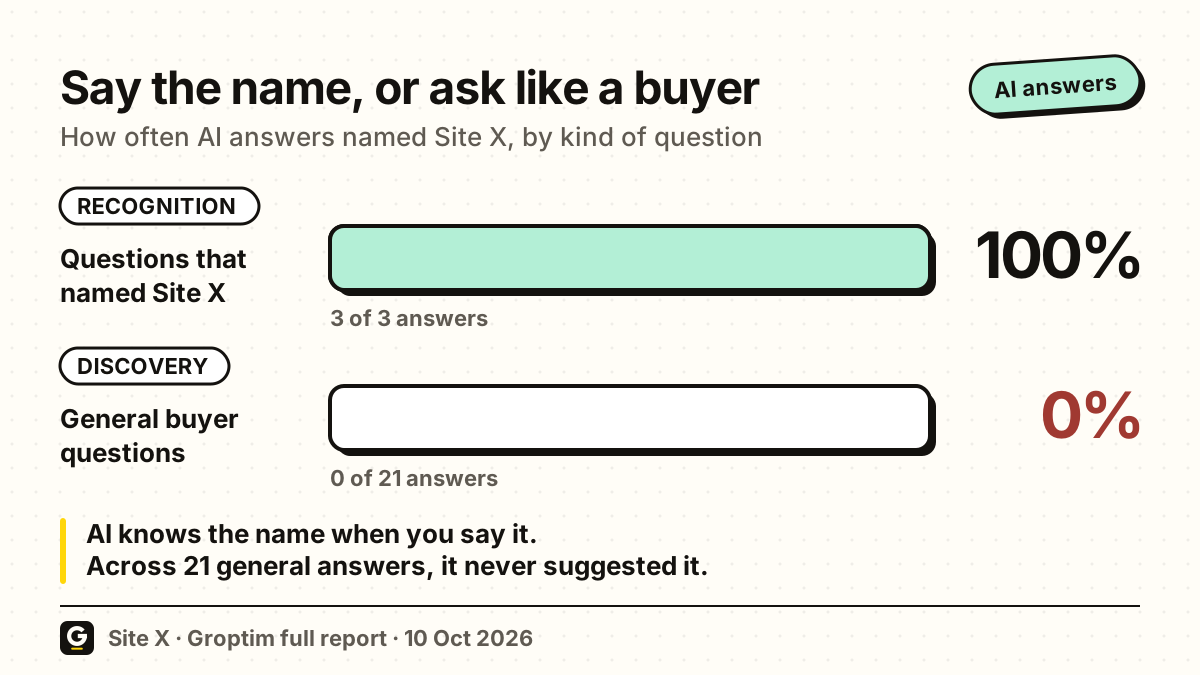
| Question naming Site X, asked 3 times | Named in 3 of 3 |
| 7 general buyer questions, 3 answers each | Named in 0 of 21 |
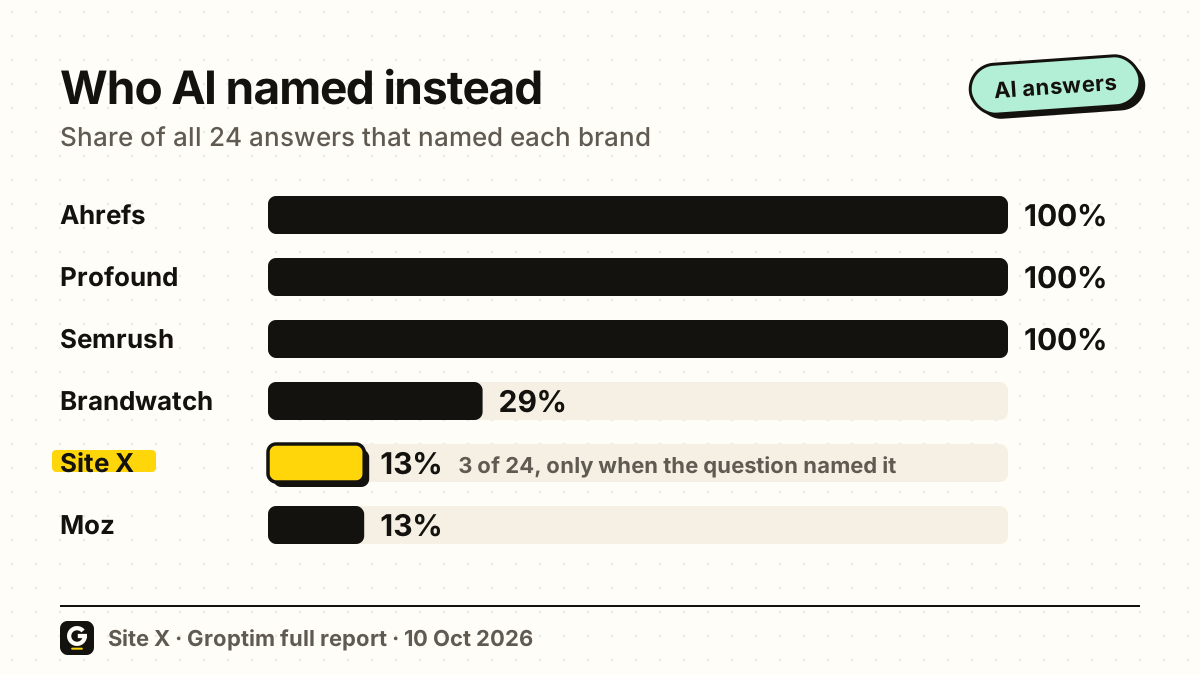
| All 24 answers together | 3 of 24 (13%, likely range 4% to 31%) |
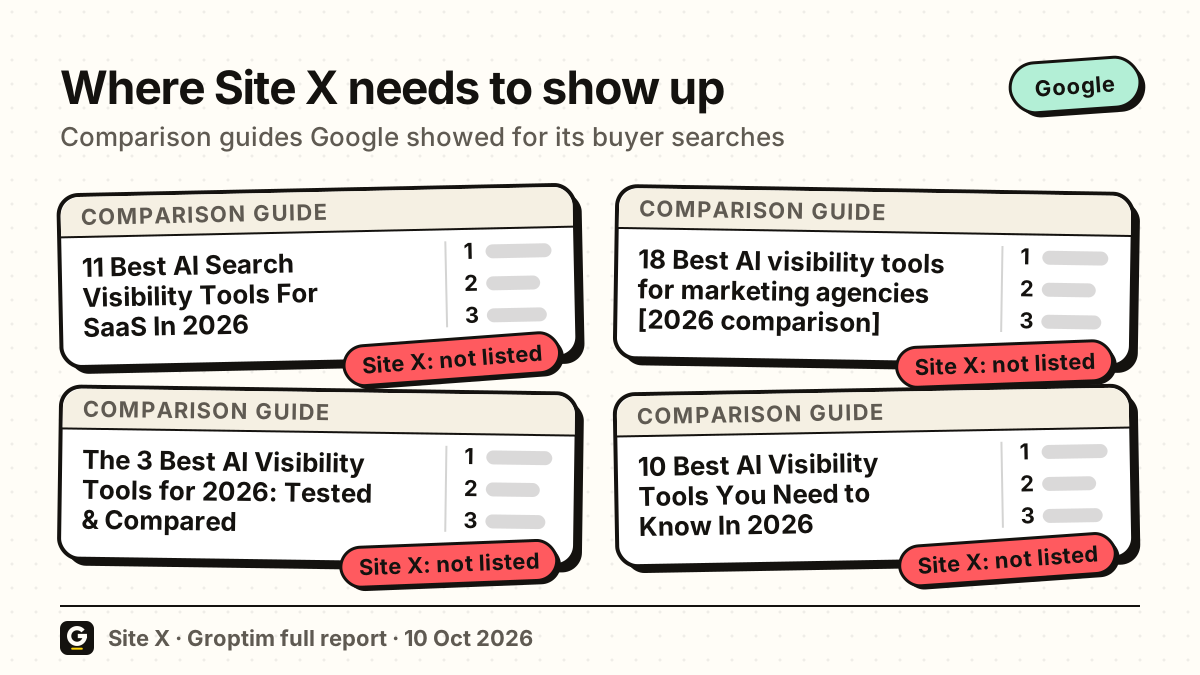
| Google page one, 8 buyer searches | 0 of 8 |
Recognised when named. Never suggested.
A second AI assistant named Site X once in 5 answers, only when the question contained its name.
Who got named instead? Across all 24 answers, branded and general, Ahrefs, Profound and Semrush were each named every time. Brandwatch appeared in 29%, Moz in 13%.
On Google, Site X's buyer searches turned up comparison guides such as "11 Best AI Search Visibility Tools For SaaS In 2026".
Caveats: answers came from what AI models know, not a live web search, which can differ. And 24 answers is a small sample, hence the wide range.
Why didn't a perfect website check help?
Settings decide whether you can be considered, not whether you are chosen.
Google: "To be eligible to be shown as a supporting link in AI Overviews or AI Mode, a page must be indexed and eligible to be shown in Google Search with a snippet" (AI features and your website, updated 10 December 2025). Eligible is not selected.
OpenAI: "Sites that are opted out of OAI-SearchBot will not be shown in ChatGPT search answers, though can still appear as navigational links" (crawler documentation, undated, checked 10 October 2026). Blocking can take you out. Allowing does not put you in.
And the 3 of 3? When the question contains your name, naming you may just echo it: recognition, not discovery.
How do you run an AI search audit by hand?
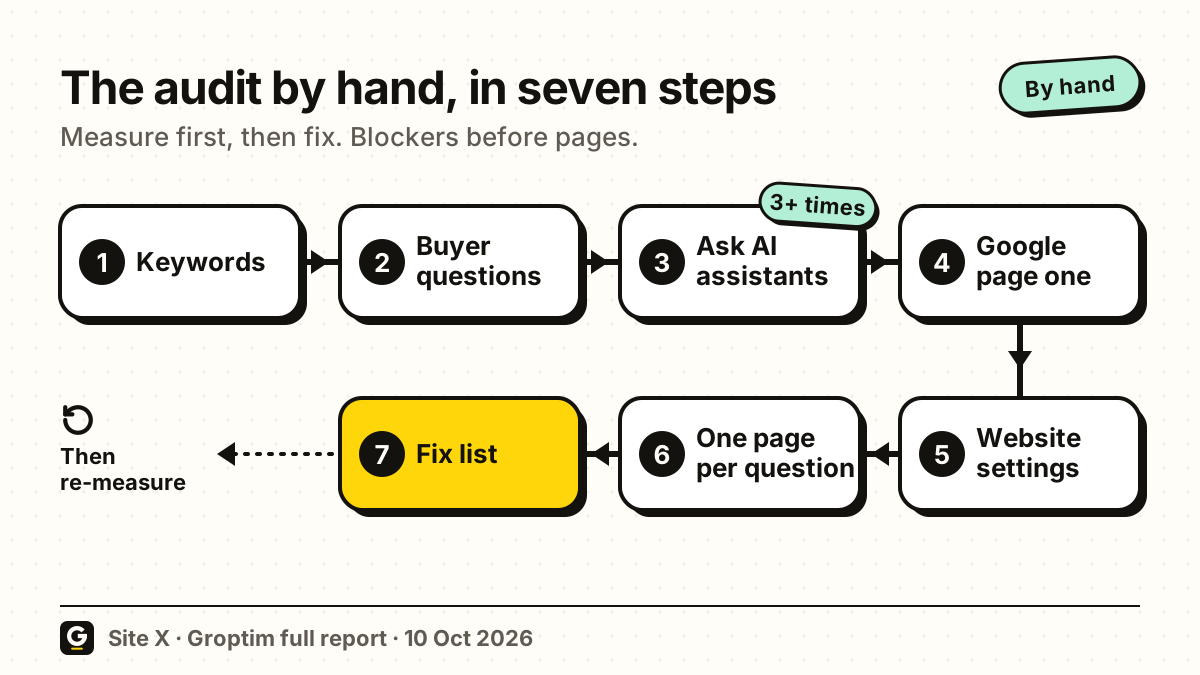
Proof levels: documented guidance (the company says so), recommended next step (sensible, not proven), measurement (shows where you stand).
| Step | How to check | Proof level |
|---|---|---|
| 1. Keywords | Search Console, customers' words | Documented guidance (Google) |
| 2. Buyer questions | Three or four per keyword | Recommended next step |
| 3. Ask AI | Several assistants, three asks each | Measurement; answers vary |
| 4. Google page one | Same searches, private window | Measurement |
| 5. Website settings | Indexed, search readers allowed | Documented guidance |
| 6. One page per question | Name the page that answers it | Recommended next step |
| 7. Fix list | Blockers first, re-measure last | Each fix keeps its own label |
1. Keywords. Google's SEO Starter Guide (updated 10 December 2025): "Think about the words that a user might search for to find a piece of your content." Search Console's Performance report (undated, checked 10 October 2026) lists the searches that showed your site. Keep 10 to 20 about what you sell.
2. Buyer questions. A keyword is a fragment; a question has a buyer behind it. For a dog groomer:
- Category: "Who are the best dog groomers in [city]?"
- Comparison: "[You] or [competitor] for nervous dogs?"
- Use case: "Who grooms large dogs on Sundays?"
- Branded: "Is [you] any good?"
Keep branded questions apart. They flatter you.
3. Ask AI. New chat, memory off. Several assistants (ChatGPT, Gemini, Perplexity, Claude, Copilot), three times each, on different days. Log who got named, and anything wrong about you. Our guide to getting named in ChatGPT has a log sheet.
4. Google page one. Use a private window: Google uses "information such as your location, past Search history, and Search settings" (how results are ranked, undated, checked 10 October 2026). Note what kind of page ranks: that is where to be.
5. Website settings. This only removes blockers. Pages must be indexed and able to show a snippet (the text under a search result). If robots.txt (the file telling automated readers what they may read) blocks a search reader such as OAI-SearchBot, removing that rule removes a barrier. It does not create a mention.
6. One page per question. Name the one page that should answer each question. The usual gaps: no page, the buyers' words missing, or two pages competing.
7. Fix list. Blockers first, then missing pages, then presence in the guides, review sites and forums where answers already look. Re-measure the same way and compare counts. Nobody can honestly promise how fast a change shows up.
What is on Site X's fix list?
The report's action plan, all labelled Recommended next step:
- Build a buyer-decision page for someone comparing options, in their words.
- Give general buyer searches a clear destination page. No page on Site X answers "What are the best AI search visibility tools?" directly yet. Nobody documents that such a page earns an AI mention.
- Ask to be considered in those comparison guides. In an Ahrefs study of 750 ChatGPT prompts (4 December 2025), "'best X' blog lists represented 43.8% of all page types" among the sources ChatGPT's answers linked. A correlation, not a promise. Offer accurate facts and let the editor decide: an unlabelled paid link is link spam under Google's spam policies (updated 28 August 2026).
Not on the list: a "best tools" page where Site X ranks itself first. Such lists can still get cited (the Ahrefs study even recommends them), but we would not build strategy on one.
There is no "after" yet: Site X has not made these fixes. We plan to re-run the same report after the fixes and update this post with the real after, whatever it shows.
What should you leave off?
- llms.txt or schema markup sold as citation fixes. Google: "You don't need to create new machine readable files, AI text files, or markup to appear in these features" (AI features page). We found nothing in OpenAI's, Microsoft Bing's, Anthropic's or Perplexity's guidance saying their answers use llms.txt. Schema markup can help search engines understand a page (Microsoft Bing says the same for its AI answers, 8 October 2025), so it is ordinary site hygiene, not a citation fix.
- Guarantees. Only the AI company or Google decides what their answers show.
Where Groptim fits
Groptim's website check covers part of Step 5: it flags, by name, when your settings tell ChatGPT's, Perplexity's or Google's search reader to stay off your homepage. It does not measure AI mentions.
The full audit report measures Steps 3 and 4: mentions in AI answers to buyer questions, next to competitors, and, where usable evidence exists, whether you appear on Google's first page. It asks AI models directly, not the ChatGPT or Perplexity apps, then builds a fix list with these labels. It cannot promise a mention; nothing honest can.
How we made this: Site X's numbers come from a full Groptim report run on 10 October 2026; the site is anonymised and the report is not public. Every outside fact links to its source, checked that day.